
CALL US TOLL FREE
888-996-9890

Hip pain and sciatica can turn bedtime into a frustrating search for the one position that does not hurt. Lying completely flat may increase pressure around the hips, pull on the lower back, or allow pain to travel down the leg. Piling up pillows can help temporarily, but pillows shift, flatten, and rarely provide consistent support throughout the night.
An adjustable bed gives you more control. By independently raising your upper body and legs, you can experiment with positions that reduce pressure, support your knees, and place your lower back in a more comfortable posture.
An adjustable bed is not a treatment for arthritis, a herniated disc, sciatica, or another medical condition. However, the right base and mattress may make it easier to find and repeat a more comfortable sleeping position.
In this 2026 buyer’s guide, we explain which adjustable-bed features matter most for hip pain and sciatica, how to position the bed, and which models provide the most useful combinations of articulation, lumbar support, massage, and programmable settings.
| Adjustable bed | Best for | Standout features |
|---|---|---|
| Ergomotion RIO 5.0 | Best overall | Adjustable lumbar support, active head tilt, massage, wall-saving design |
| Ergo-Pedic iTilt | Best for whole-body incline | Patented tilt, chaise positioning, dual-zone massage |
| Ergomotion RIO 6.0 | Best furniture-style base | Lumbar support, active head tilt, finished frame, massage |
| Malouf M555 | Best massage features | 12 dual-zone massage combinations, five presets, app control |
| Split king configuration | Best for couples | Independent positioning on each side |
An adjustable bed may help some people with hip discomfort by changing how pressure is distributed across the body.
When you sleep flat on your back with your legs completely straight, the position can increase tension through the hip flexors and lower back. Raising the knees slightly may allow the hips and knees to bend into a more relaxed position. It can also recreate the support normally provided by placing a pillow beneath the knees—without depending on that pillow to remain in place all night.
For side sleepers, hip pain often comes from pressure against the mattress or poor alignment between the hips, pelvis, and spine. An adjustable base cannot completely eliminate pressure on the hip underneath you, so mattress selection remains extremely important. However, gentle head and foot elevation may help certain side sleepers settle into a more supported posture.
The Arthritis Foundation recommends that back sleepers with hip discomfort try support beneath the knees. Side sleepers may benefit from sleeping on the less painful side and placing one or more pillows between the legs to keep the hips better aligned. An adjustable base makes the back-sleeping version of this position easier to create and maintain.
Sciatica describes pain associated with irritation or compression of the sciatic nerve. Symptoms can begin in the lower back or buttock and travel through the hip and down one leg. Depending on the cause, lying flat or extending the legs may make symptoms more noticeable.
For some sleepers, elevating the knees reduces the arch in the lower back and creates a more relaxed, slightly flexed position. Others prefer raising both the upper and lower body into a zero-gravity-style posture.
The important point is that there is no universal “sciatica angle.” Sciatica can have several underlying causes, and a position that feels comfortable for one person may aggravate another. An adjustable base is useful because it lets you make small changes instead of committing to a fixed wedge or one-size-fits-all incline.
Start with modest elevation and adjust gradually. More incline is not automatically better.
Zero gravity raises both the head and legs while keeping the knees bent. This may distribute body weight more evenly and reduce the feeling of pressure in the lower back.
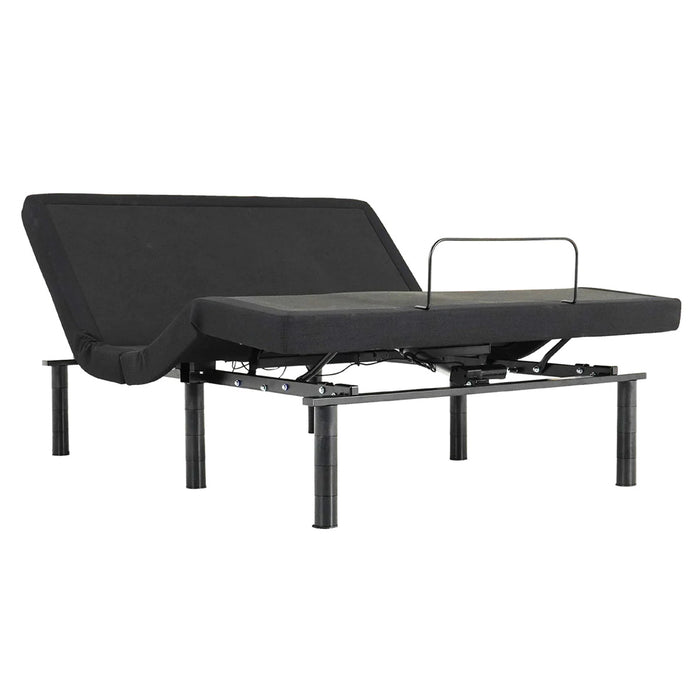
It can be a useful starting point for back sleepers with:
The factory zero-gravity preset is only a starting point. Adjust the head and foot sections until the position feels natural rather than forcing your body to match the preset.
This is usually the simplest position to try. Raise the head modestly and elevate the legs until the knees are comfortably bent.
The goal is not to fold yourself into a taco. It is to create enough elevation to support the legs and reduce tension without placing excessive bend through the hips.
People whose discomfort is concentrated around the lower back, buttock, or back of the leg may prefer keeping the upper body relatively low while raising the knees.
If the mattress feels as though it is pushing too firmly into the back of the knees, reduce the foot elevation. The position should feel supported, not restrictive.
A whole-body tilt elevates the bed on an incline while keeping the sleep surface comparatively flat. This differs from simply raising the head section, which bends the mattress around the waist.
Whole-body tilt may be appealing to people who want elevation without as much flexion through the hips. It can also be useful for side sleepers who dislike being folded into a traditional adjustable-bed position.
Adjustable bases work most naturally for back sleeping, but mild articulation can still be comfortable for some side sleepers.
Keep the incline gentle and use a pillow between the knees and, if needed, the ankles. This helps prevent the upper leg from dropping forward and rotating the pelvis. The mattress should also provide enough pressure relief for the hip and shoulder.
This is the foundation of any useful adjustable base. Independent controls let you change the position of the upper and lower body separately.
For hip pain and sciatica, foot articulation is particularly important because it lets you support the knees instead of leaving the legs completely straight.
Lumbar support is one of the most valuable premium features for sleepers dealing with lower-back or sciatic discomfort.
A lumbar bar or adjustable support section changes the amount of reinforcement underneath the lower back. The correct amount is highly personal, so powered adjustment is preferable to a permanently raised section.
More lumbar support is not always better. Excessive pressure beneath the lower back can worsen discomfort. Begin at the lowest setting and increase it gradually.
Pain-friendly positioning often comes down to small differences. Once you find a comfortable combination of head, leg, and lumbar adjustment, a programmable memory button allows you to return to it without rebuilding the position every night.
This is much more useful than it sounds—especially at 2:00 a.m., when conducting a mattress engineering experiment loses its charm.
Adjustable-base massage is vibration rather than the kneading massage found in a massage chair. It will not correct the underlying cause of hip pain or sciatica.
However, gentle vibration may help some people relax before bed, reduce the perception of muscular tension, and become more comfortable while settling into a sleep position. Look for multiple intensities and an automatic timer.
A zero-gravity button provides an easy starting position with the head and legs elevated. Almost every quality base now includes one, but the ability to customize and save a modified version is more valuable than the preset alone.
A wall-saving base moves the mattress backward as the head rises. This keeps you closer to your nightstand and may reduce how far you must twist or reach for a phone, remote, water, or medication.
That convenience can be especially helpful when movement itself is uncomfortable.
Getting into and out of bed can be difficult when hip or leg pain flares. Choose a base height that allows you to sit with your feet planted and stand without dropping too low or climbing upward.
Under-bed lighting is also valuable for safer nighttime movement. It illuminates the floor without forcing you to turn on bright overhead lights.
For couples, a split king provides two Twin XL mattresses and two independently controlled bases. One person can raise the knees or use zero gravity while the other remains flat.
This is usually the best arrangement when only one partner has pain or when each person prefers a different sleeping position.
The Ergomotion RIO 5.0 offers one of the strongest combinations of positioning features for people trying to manage nighttime hip or sciatic discomfort.
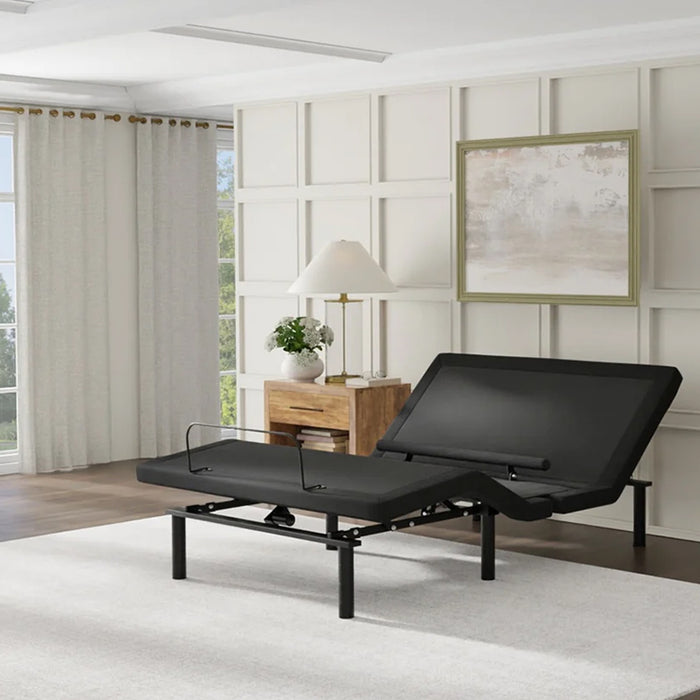
Its biggest advantage is adjustable lumbar support. Instead of relying only on head and foot articulation, the RIO 5.0 lets sleepers modify the support beneath the lower back. That gives it considerably more flexibility than a basic adjustable base.
The RIO 5.0 also includes active head tilt, head and foot articulation, a zero-gravity preset, an anti-snore position, programmable settings, vibration massage, under-bed lighting, USB charging, and app-based control.
Its wall-saving design keeps the upper body closer to the headboard and nightstand as the bed rises. The base is also zero-clearance compatible, allowing it to work with many platform beds and existing bedroom setups.
Why we like it for hip pain and sciatica:
Potential drawbacks:
Best for: Shoppers who want maximum positioning control without moving into an unusually specialized base.
The Ergo-Pedic iTilt Incline Therapy Adjustable Bed stands apart because it can tilt the entire sleep surface by up to 12 degrees.
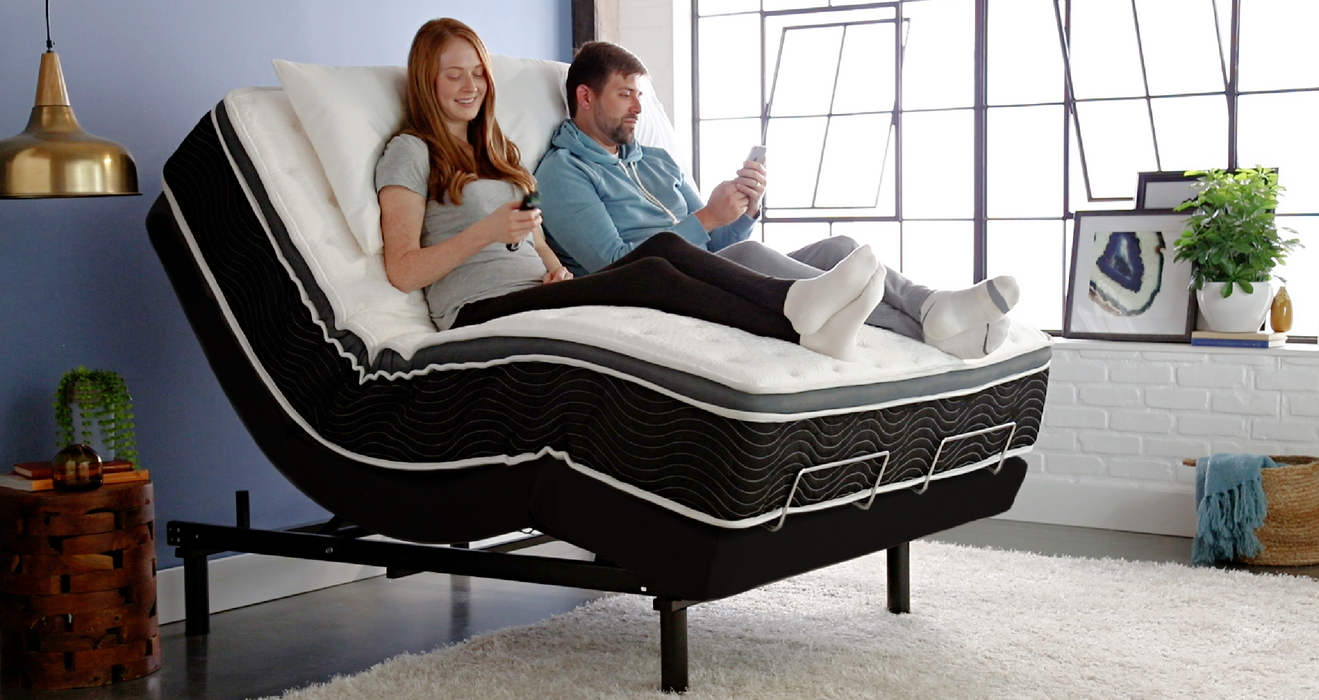
Traditional adjustable beds raise the head and foot sections by bending the mattress. The iTilt can also elevate the complete platform, allowing sleepers to remain comparatively flat while their entire body rests on an incline.
That added positioning option may appeal to side sleepers or anyone who finds that conventional articulation creates too much bend around the hips. The iTilt also provides independent head and foot adjustment, a tilt-chaise position, zero gravity, anti-snore and TV presets, dual-zone massage, programmable buttons, under-bed lighting, and wall-hugging movement.
Why we like it for hip pain and sciatica:
Potential drawbacks:
Best for: Sleepers who want incline without dramatically bending the body, including some side sleepers and people who dislike conventional adjustable-bed positions.
The Ergomotion RIO 6.0 carries over many of the positioning features that make the RIO 5.0 compelling, including adjustable lumbar support, active head tilt, head and foot articulation, zero gravity, massage, programmable positions, wall-saving movement, and under-bed lighting.
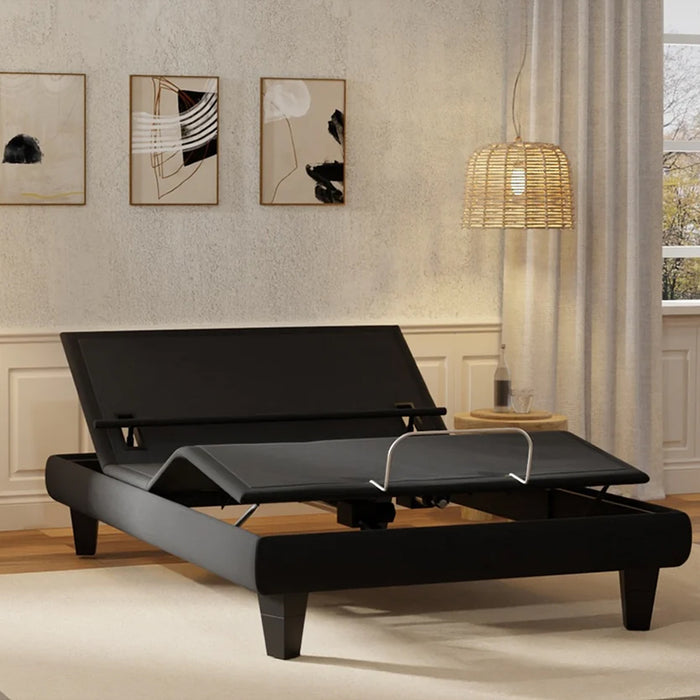
The difference is its finished, upholstered deck-on-deck construction. It is designed to look more like a complete piece of bedroom furniture instead of a mechanical base placed inside another bed frame.
Universal headboard brackets are included, and the base uses adjustable wooden legs. That makes the RIO 6.0 a strong choice for shoppers who want sophisticated positioning but also care about the appearance of the bed.
Why we like it for hip pain and sciatica:
Potential drawbacks:
Best for: Shoppers who want RIO-level support features in a base that can function as a finished bed.
The Malouf M555 Smart Adjustable Bed Base is particularly attractive for people who value relaxation massage and extensive preset control.
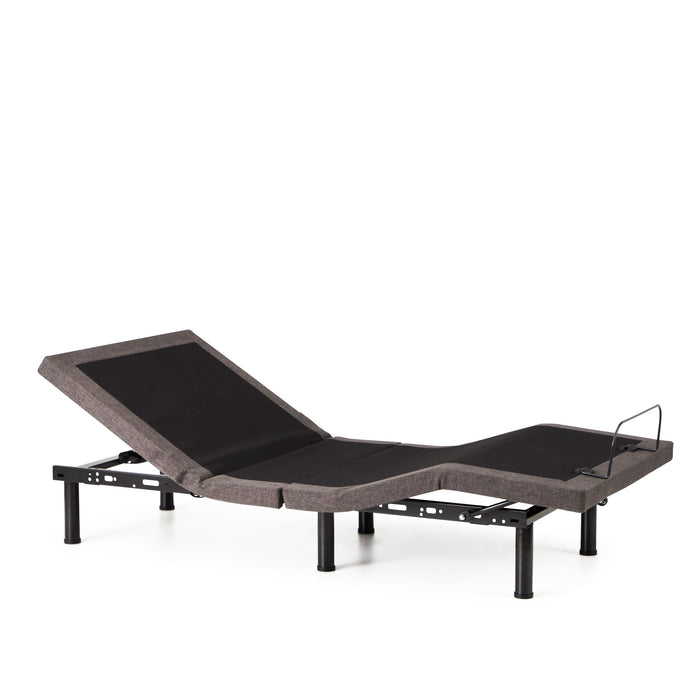
It offers independent head and foot elevation, zero gravity, anti-snore, lounge, TV and flat presets. Its dual-zone vibration system provides four massage patterns, three intensity levels, and three timer settings.
The base can also save five customized positions. That makes it easy to create separate settings for sleeping, reading, relaxing, or elevating the knees during a pain flare.
The M555 supports app control, includes a child-safety lock, offers true zero-clearance installation, and has an 850-pound listed weight capacity across its available sizes.
Why we like it for hip pain and sciatica:
Potential drawbacks:
Best for: Sleepers who use vibration to relax before bed and want to save several customized positions.
Choose the Ergomotion RIO 5.0 if you want the best overall combination of lumbar support, head and foot adjustment, massage, and programmable positioning.
Choose the Ergo-Pedic iTilt if you want whole-body incline or find that conventional adjustable beds create too much bend through your hips.
Choose the Ergomotion RIO 6.0 if you want advanced lumbar and positioning features in a finished furniture-style frame.
Choose the Malouf M555 if massage variety, app control, and numerous saved positions are your priorities.
Choose a split king if you share the bed and need to adjust your side without changing your partner’s position.
Even the best adjustable base cannot compensate for the wrong mattress.
A mattress used with an adjustable bed must be flexible enough to bend repeatedly without damage. Memory foam, latex, and many hybrid mattresses are compatible, but you should verify compatibility before purchasing.
For hip pain, pressure relief is especially important. A mattress that is too firm may create concentrated pressure against the hip, particularly for side sleepers. A mattress that is too soft can allow the pelvis to sink excessively and pull the spine out of alignment.
Most people should look for a balance:
Body weight and sleep position matter. A mattress that feels supportive to a 150-pound back sleeper may feel entirely different to a 250-pound side sleeper.
Start with the bed flat and make one small change at a time.
Avoid immediately using the maximum head, foot, or lumbar setting. Extreme articulation may look impressive in a showroom but is rarely the ideal all-night sleeping position.
If you sleep on your side, use only mild elevation at first. Keep a pillow between your knees to help maintain hip and pelvic alignment.
It can be comfortable for some people because it bends the knees and changes pressure through the lower back. However, sciatica has multiple possible causes, and no single position works for everyone. Use zero gravity as a starting point and customize it based on comfort.
Back sleepers may find that gentle knee elevation reduces tension around the hips and lower back. Side sleepers usually benefit more from pressure-relieving mattress materials and a pillow between the knees. Stop using any position that increases pain, numbness, tingling, or weakness.
Yes, although side sleepers usually need less articulation than back sleepers. Whole-body tilt or mild head and foot elevation may feel more natural than an aggressive zero-gravity position.
Not necessarily. Excessive firmness can create uncomfortable pressure, while an overly soft mattress can allow poor alignment. The best choice generally combines pressure relief with stable support and depends on body weight, sleep position, and personal comfort.
The vibration in an adjustable base may promote relaxation or temporarily reduce the perception of muscular tension, but it does not treat nerve compression or the underlying cause of sciatica.
Most standard adjustable bases are treated as consumer furniture and are not covered by health insurance or Medicare. Coverage may differ for medically necessary durable medical equipment prescribed by a healthcare provider. HSA or FSA eligibility also depends on the plan and whether medical documentation is required.
Seek medical care when pain is severe, persistent, worsening, follows an injury, or interferes with normal activity. Urgent evaluation is important for new loss of bladder or bowel control, numbness around the groin or saddle area, fever, or significant leg weakness.
The best adjustable bed for hip pain and sciatica is one that gives you precise, repeatable control over your sleeping position.
For most shoppers, the Ergomotion RIO 5.0 is our best overall choice because its powered lumbar support, head and foot articulation, massage, and programmable settings provide exceptional flexibility.
The Ergo-Pedic iTilt is the most distinctive alternative for sleepers interested in whole-body incline, while the Ergomotion RIO 6.0 combines advanced support with a more finished appearance. The Malouf M555 is an excellent option for shoppers who prioritize massage and saved comfort positions.
Most importantly, pair the base with a pressure-relieving, adjustable-compatible mattress. The base determines your position, but the mattress determines how comfortably your hips, shoulders, and spine are supported within that position.
Shop all adjustable beds at Bed Planet
This article is for general informational purposes and is not medical advice. An adjustable bed may improve comfort, but it does not diagnose or treat hip pain, sciatica, arthritis, disc problems, or other medical conditions. Consult a qualified healthcare professional for persistent, severe, or worsening symptoms.