
CALL US TOLL FREE
888-996-9890

Waking up with heartburn, a sour taste, coughing, or discomfort in your chest can turn bedtime into something you dread.
For people with nighttime acid reflux or gastroesophageal reflux disease—better known as GERD—lying flat may make symptoms more noticeable. That is one reason doctors sometimes recommend elevating the head of the bed as part of a broader treatment plan.
An adjustable bed makes that elevation easier and more precise. Instead of stacking pillows under your head, you can raise your upper body, support more of your torso, and save a comfortable position for future nights.
But not every adjustable base works the same way.
Some provide simple head elevation. Others include full-body incline, programmable positions, active head tilt, lumbar support, or Zero Gravity. Choosing the right model—and pairing it with a compatible mattress—can make the difference between a position you tolerate for a few minutes and one you can comfortably sleep in all night.
This guide covers:
How elevation may help nighttime reflux
The best adjustable-bed features for GERD
How high to elevate your bed
Full-body incline versus regular head articulation
Adjustable bases available from BedPlanet
Mattress types that work well in elevated positions
Common setup mistakes
Frequently asked questions
Medical note: An adjustable bed is a comfort and positioning product, not a cure for GERD or a replacement for medical care. Speak with a qualified healthcare professional about persistent, severe, or changing symptoms.
For sleepers with nighttime reflux, the most useful adjustable-bed feature is generally reliable elevation of the head and upper torso.
A base with full-body incline or tilt provides the most direct approximation of traditional head-of-bed elevation because it can place the sleeping surface on a gradual slope. A conventional articulating base can also be helpful, especially when it supports the torso instead of bending the sleeper sharply at the neck or waist.
Our quick recommendations are:
Best for full-body incline: Ergo-Pedic iTilt Incline Therapy Adjustable Bed
Best premium dual-tilt base: Reverie R650 Dual-Tilt Adjustable Power Base
Best feature-rich conventional base: Ergomotion RIO 5.0 Adjustable Bed
Best straightforward budget option: Ergomotion RIO 1.0 Adjustable Bed
The best choice ultimately depends on your preferred sleep position, mattress, budget, body type, bedroom furniture, and medical provider’s recommendations.
These terms are related, but they do not mean exactly the same thing.
Acid reflux describes stomach contents moving backward into the esophagus. Heartburn is the burning sensation that reflux can cause in the chest or throat.
GERD is a medical condition involving recurring reflux that causes troublesome symptoms or complications. Symptoms can include heartburn, regurgitation, coughing, hoarseness, difficulty swallowing, and sleep disruption.
Because chest pain and swallowing problems can also have causes unrelated to GERD, they should not automatically be self-diagnosed as reflux. The National Institute of Diabetes and Digestive and Kidney Diseases recommends medical evaluation for symptoms that may indicate GERD complications or another serious condition.
Seek urgent medical help for chest pain accompanied by shortness of breath or pain in the arm or jaw.
Gravity helps keep stomach contents where they belong while you are standing or sitting. When you lie flat, that assistance disappears.
Nighttime symptoms may also be influenced by:
Eating shortly before lying down
Sleeping on your back or right side
Certain foods or beverages
Excess pressure around the abdomen
Pregnancy
Body weight
A hiatal hernia
Individual anatomy
The timing or effectiveness of GERD medication
The American College of Gastroenterology advises people with nighttime symptoms to consider raising the head of the bed. Its patient guidance discusses elevating the head approximately 6–10 inches and notes that ordinary pillows are not an effective substitute for proper bed or torso elevation. See the ACG acid reflux guidance.
A systematic review of controlled studies found that head-of-bed elevation appeared to improve patient-reported reflux symptoms, although the available studies were relatively small and had methodological limitations. In other words, elevation is a reasonable low-risk strategy to discuss with your healthcare provider, but it should not be presented as a guaranteed result. Read the systematic review on head-of-bed elevation.
An adjustable base lets you raise the mattress beneath your upper body instead of placing several pillows under your head.
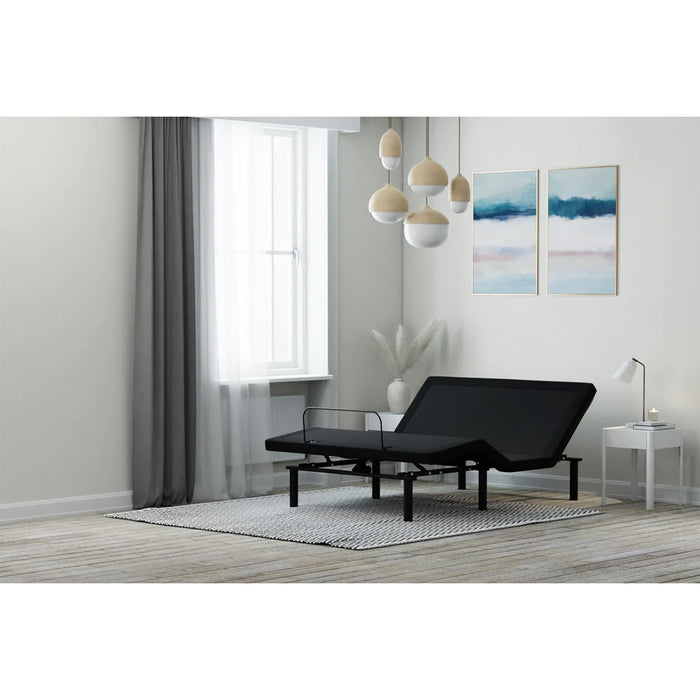
That distinction matters.
Stacked pillows may elevate only the head and neck. They can collapse, move during the night, or cause the sleeper to curl forward. An adjustable base supports a larger portion of the upper body and lets you fine-tune the position.
Potential advantages include:
More consistent elevation throughout the night
Better support under the shoulders and torso
Smaller, more precise position changes
Less pillow shifting
Saved custom positions on programmable models
Easier transitions between sleeping, reading, and flat positions
Independent adjustment for couples using a split base
An adjustable bed should be viewed as one possible part of a GERD-management plan. It does not reduce stomach-acid production, repair the lower esophageal sphincter, or replace medication prescribed by a doctor.
There is no universal “GERD angle” that works for everyone.
Medical guidance is commonly expressed as inches of head-of-bed elevation rather than a precise remote-control angle. The ACG discusses raising the head of the bed by approximately 6–10 inches for nighttime symptoms.
That does not mean every sleeper should immediately raise an adjustable bed as high as possible. Comfort, spinal alignment, mattress behavior, and individual medical needs all matter.
Start with the bed flat.
Raise the head section gradually until your shoulders and upper torso are clearly above your stomach.
Make sure the mattress supports your torso rather than bending you sharply at the waist.
If your base provides full-body incline, experiment with a gentle slope before trying a steeper position.
Test the position for comfort while you are awake.
Save the position if your remote includes programmable memory buttons.
Track your nighttime comfort and symptoms for one or two weeks.
Discuss persistent symptoms or significant sleep disruption with your healthcare provider.
The ideal position should feel stable enough to maintain while sleeping. A dramatic angle that causes sliding, abdominal compression, neck strain, or lower-back discomfort is unlikely to be sustainable.
Understanding how a base moves is more important than choosing one based only on the word “adjustable.”
A full-body incline raises one end of the sleeping surface relative to the other, creating a more continuous slope.
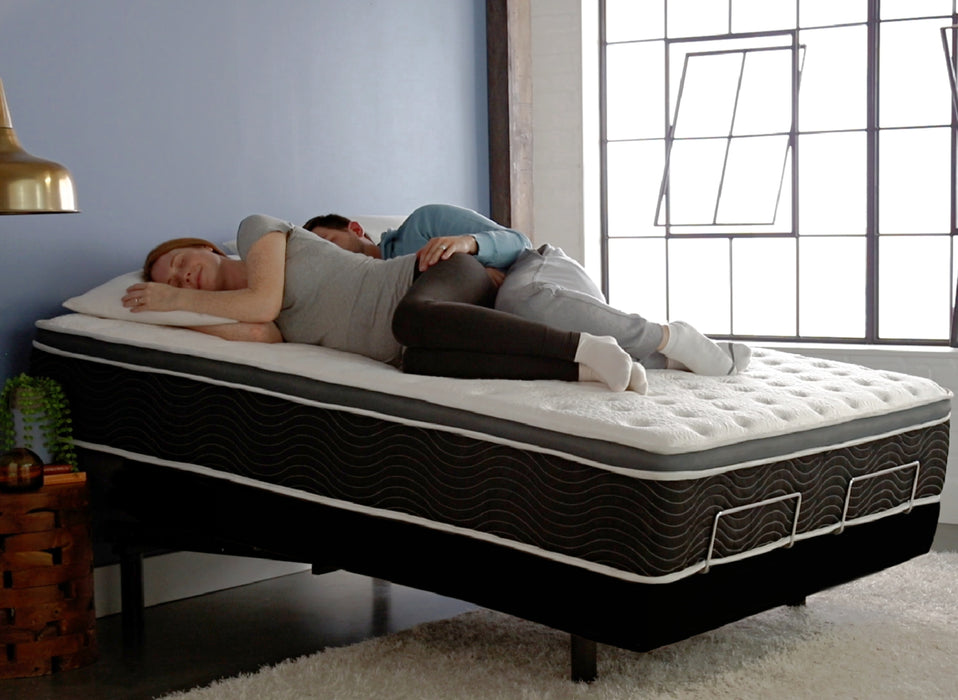
Advantages may include:
More even elevation from head to foot
Less bending through the waist
Easier side sleeping for some people
Positioning that more closely resembles raising the head of a conventional bed
This is the primary reason models such as the Ergo-Pedic iTilt and Reverie R650 stand out for shoppers specifically concerned with incline positioning.
Most adjustable bases raise the upper portion of the mattress while the center of the base remains comparatively fixed.
Advantages include:
Wide product selection
Lower-cost options
Independent head and foot control
Common presets such as Zero Gravity and Anti-Snore
Compatibility with many existing bed frames
This movement can still provide useful upper-body elevation. The key is finding a comfortable position that supports the torso without creating excessive pressure at the waist.
Zero Gravity typically raises both the upper body and legs.
Many sleepers enjoy it because it can reduce pressure on the lower back and create a supported, weightless feeling. However, Zero Gravity is not automatically the best GERD position.

For reflux-focused positioning, confirm that:
Your upper torso remains meaningfully higher than your stomach
The position does not fold you tightly through the abdomen
Raising your knees does not cause uncomfortable abdominal pressure
You can maintain the position while sleeping
Treat Zero Gravity as a comfort preset—not as a medically standardized reflux setting.
An Anti-Snore preset usually applies mild head elevation. It may be a comfortable starting point, but the amount of elevation varies by manufacturer and may be less than your healthcare provider recommends for nighttime reflux.
TV positions tend to be much more upright. They are useful for reading and relaxing but are generally not designed as overnight sleep positions.
Best for: Full-body incline and side-sleeping flexibility
The Ergo-Pedic iTilt is one of the most specialized options in BedPlanet’s adjustable-bed collection.
Unlike a base limited to conventional head-and-foot articulation, the iTilt includes incline and tilt positioning. This allows the sleeping surface to form a more gradual slope while still providing regular adjustable-base functionality.

Notable features include:
Full-body incline and tilt
Independent head and foot adjustment
Zero Gravity, Anti-Snore, and TV presets
Programmable positions
Wall-hugging movement
Dual-zone massage
Bluetooth control
Under-bed lighting
Split King availability
Why it stands out:
A gradual incline may be more comfortable for sleepers who dislike the feeling of being sharply bent by a traditional adjustable base. It can also make it easier for some side sleepers to remain elevated without being pushed into a primarily back-sleeping position.
Potential consideration:
The iTilt provides more specialized movement than a basic base, so it costs more than entry-level head-only models. Measure your room and confirm compatibility with your mattress and bed furniture before ordering.
Best for: Premium positioning, customization, and massage
The Reverie R650 combines head-and-foot adjustment with a dual-tilt system.
Its tilt motor can change the orientation of the entire base in addition to adjusting individual sections. That gives sleepers a wider positioning range than a standard articulating frame.

Notable features include:
Dual-tilt positioning
Independent head and foot adjustment
Zero Gravity and Anti-Snore presets
Programmable positions
Bluetooth app control
3D-Wave massage
Under-bed lighting
850-pound stated weight capacity
Split configurations
Why it stands out:
The R650 is a strong option for shoppers who want both full-body tilt and luxury comfort features. Its programmable controls make it possible to save a preferred elevated position after experimenting with different settings.
Potential consideration:
This is a premium model with advanced features. Shoppers who only need basic head elevation may not need its complete feature set.
Best for: Everyday comfort and customizable presets
The Ergomotion RIO 5.0 is a conventional articulating base rather than a full-body incline model, but it offers a useful combination of positioning and convenience features.
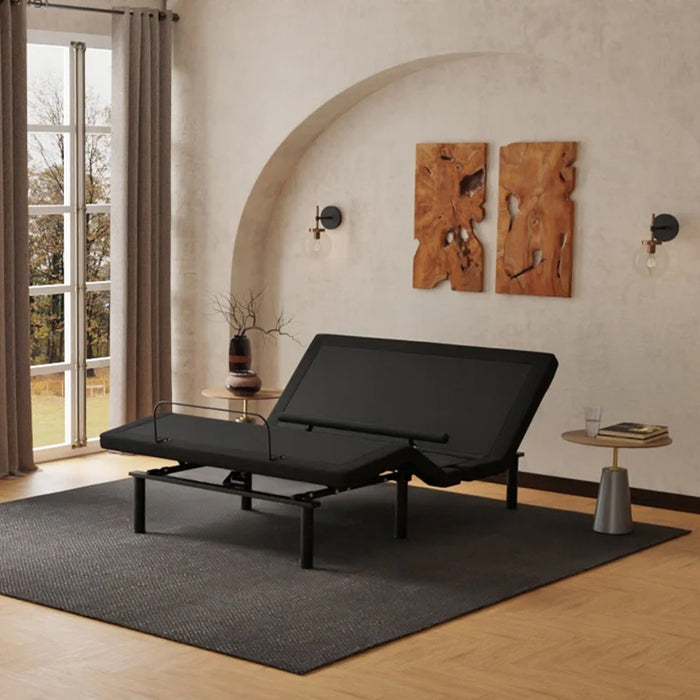
Notable features include:
Head and foot articulation
Active head tilt
Lumbar support
Wall-saver movement
Zero Gravity
Anti-Snore
Two programmable positions
App control
Zero-clearance design
Under-bed lighting
USB charging
Why it stands out:
Active head tilt and programmable positions allow more precise adjustments than a basic head-up base. The wall-saver design also helps keep the sleeper closer to a nightstand as the head rises.
Potential consideration:
Because the RIO 5.0 articulates rather than placing the entire mattress on one continuous incline, sleepers should pay attention to how the position feels through the waist and abdomen.
Best for: Simple, budget-conscious head elevation
The Ergomotion RIO 1.0 is a straightforward option for shoppers who do not need massage, app control, or multiple presets.

Notable features include:
Powered head articulation
Simple wired remote
Quiet motor
Zero-clearance design
Foldable construction
Compatibility with many existing bed setups
Why it stands out:
For someone who primarily wants to raise the upper body, the RIO 1.0 provides a simpler and more affordable entry into adjustable sleep.
Potential consideration:
It does not provide the full-body tilt, foot articulation, saved positions, or advanced comfort features found on premium models.
| Model | Positioning type | Best for | Key reflux-related advantage |
|---|---|---|---|
| Ergo-Pedic iTilt | Full-body incline plus articulation | Dedicated incline positioning | Creates a gradual sleeping slope |
| Reverie R650 | Dual tilt plus articulation | Premium customization | Broad positioning range with saved settings |
| Ergomotion RIO 5.0 | Head-and-foot articulation | Feature-rich everyday use | Active head tilt and programmable positions |
| Ergomotion RIO 1.0 | Head articulation | Budget-conscious shoppers | Simple powered upper-body elevation |
Product features, pricing, sizes, and availability can change. Review the current product page or speak with a BedPlanet specialist before purchasing.
The base is only half of the sleep system.
A mattress must bend repeatedly without buckling, lifting away from the frame, damaging its internal structure, or making the sleeper feel trapped in the articulated position.
Memory foam is one of the easiest mattress types to pair with an adjustable base.
Advantages include:
Excellent flexibility
Strong pressure relief
Good motion isolation
Comfortable contouring for many side sleepers
Consistent contact with an articulated base
Potential drawbacks include heat retention, slower responsiveness, and a “sinking” feeling in softer models.
A medium or medium-firm memory-foam mattress is a practical starting point for many shoppers, but firmness should be selected according to sleep position, body type, and personal comfort.
A modern hybrid can work extremely well on an adjustable base when it uses individually wrapped coils designed to flex independently.
Advantages include:
Better airflow than many all-foam mattresses
Responsive movement
Stronger edge support
A more traditional mattress feel
Options for a wide range of firmness preferences
Always verify that the manufacturer approves the specific hybrid for adjustable-base use. Traditional interconnected coil systems may not articulate correctly.
Latex is naturally responsive and can be highly durable.
Advantages include:
Fast response when changing positions
Good airflow
Long-term durability
Less of a deep-sinking sensation
Natural and organic options
Latex mattresses can also be heavy, and some firm or thick models may not follow an adjustable base as easily as softer foam.
Be careful with:
Traditional interconnected innerspring mattresses
Extremely thick or rigid mattresses
Mattresses not approved for adjustable bases
Worn mattresses with damaged support layers
Models that lift away from the frame during articulation
Before placing an existing mattress on a new base, check its warranty and compatibility requirements.
Side sleepers generally need enough cushioning around the shoulders and hips to prevent pressure buildup.
A flexible medium-soft to medium mattress may work well, depending on body weight. Full-body incline can be appealing because it may allow side sleeping on a continuous slope.
Research also suggests that sleeping on the left side may reduce nocturnal acid exposure compared with sleeping on the back or right side. A systematic review and meta-analysis found an association between left-side sleeping and improved nighttime reflux outcomes.
Back sleepers often prefer a medium to medium-firm mattress with enough support to prevent the hips from sinking excessively.
Conventional head-and-foot articulation is usually easy to use from this position. A small amount of knee elevation may improve comfort, provided it does not create unwanted abdominal pressure.
Combination sleepers should prioritize:
A responsive mattress
Easy movement
A moderate rather than extreme incline
Sufficient surface area for repositioning
Stable edge support
A responsive hybrid or latex mattress may make position changes easier than deeply contouring foam.
Couples with different positioning preferences should consider a Split King or Split California King configuration.
A split setup allows each sleeper to control their own side. One partner can remain elevated while the other sleeps flat or chooses a different angle.
Remember that a Split King uses two Twin XL mattresses, so each partner can also select a different firmness when the manufacturer allows it.
Placing several pillows under your head may bend your neck without keeping your torso elevated.
Use a position that supports the shoulders and upper body rather than creating a sharp bend at the neck.
More elevation is not automatically better. A steep position may cause sliding, back discomfort, neck strain, or pressure around the waist.
Begin gradually and prioritize a position you can maintain comfortably.
Zero Gravity is designed primarily for comfort and pressure distribution. It is not a medically standardized reflux position.
Evaluate the actual relationship between your upper torso and stomach rather than relying on the preset’s name.
A rigid mattress may fight the movement of the base, form pressure points, or lift away from the frame.
Confirm adjustable-base compatibility before buying.
Positioning is only one part of nighttime reflux management. The ACG advises avoiding meals for approximately two to three hours before lying down. Your doctor may also recommend individualized changes involving food triggers, body weight, medication, or meal timing.
An adjustable bed may make elevated sleep easier, but it does not diagnose or cure GERD.
Persistent symptoms still require appropriate medical care.
Contact a healthcare professional if you experience:
Frequent or worsening reflux
Difficulty or pain while swallowing
Food feeling stuck
Persistent vomiting
Unexplained weight loss
Gastrointestinal bleeding
Chronic coughing or hoarseness
Symptoms that continue despite treatment
New or unexplained chest pain
Seek immediate medical attention for chest pain accompanied by shortness of breath, sweating, weakness, or pain in the jaw or arm.
No. An adjustable bed is a positioning tool, not a cure.
Head-of-bed elevation may help some people manage nighttime symptoms, but GERD may also require medication, dietary changes, weight management, testing, or other treatment directed by a healthcare professional.
The American College of Gastroenterology discusses raising the head of the bed approximately 6–10 inches for nighttime symptoms.
Because adjustable bases use different mechanisms, that measurement will not correspond to one universal remote-control angle. Raise the upper body gradually and follow your healthcare provider’s recommendations.
A gradual full-body incline may feel more natural because it reduces the need for a sharp bend at the waist. However, many sleepers are comfortable using a conventional articulating base.
The best option is the one that produces appropriate elevation while maintaining comfort and spinal support.
Yes, although comfort depends on the base position and mattress.
Side sleepers often prefer a gentle incline and a flexible mattress with pressure relief at the shoulders and hips. Full-body tilt may be easier for side sleeping than an aggressive backrest position.
Studies suggest that left-side sleeping may reduce nighttime acid exposure compared with right-side or back sleeping.
Individual medical conditions vary, so discuss significant symptoms and positioning concerns with a healthcare professional.
Both can elevate the upper body, but an adjustable bed offers a larger, more stable, and more customizable support surface.
A wedge is less expensive and may work for some sleepers. An adjustable base is usually easier to fine-tune and can be more practical for couples or people who frequently change positions.
Possibly.
Memory foam, latex, and many individually wrapped hybrid mattresses work well on adjustable bases. Check the mattress manufacturer’s instructions and warranty before using it on a powered base.
It may be eligible when a qualified healthcare provider determines that it is medically necessary and the applicable plan requirements are satisfied. Documentation rules vary.
Read our guide to adjustable beds and HSA/FSA eligibility and confirm eligibility with your plan administrator before purchasing.
The best adjustable bed for acid reflux or GERD is not necessarily the model with the longest feature list.
Focus first on positioning.
For the most gradual full-body elevation, the Ergo-Pedic iTilt and Reverie R650 are the standout options. For shoppers who prefer a conventional adjustable base, the Ergomotion RIO 5.0 combines precise positioning with useful programmable features. The RIO 1.0 provides a simpler path to powered head elevation at a more accessible price.
Whichever model you choose, pair it with a flexible, adjustable-compatible mattress and take time to find a position that elevates your torso without creating strain or abdominal compression.
Most importantly, remember that better positioning should complement—not replace—appropriate medical care.
Shop adjustable beds at BedPlanet, or contact a BedPlanet sleep specialist for help comparing sizes, features, mattress compatibility, delivery options, and Split King configurations.
This article is provided for general educational purposes and is not medical advice. BedPlanet does not diagnose, treat, cure, or prevent medical conditions. Consult a qualified healthcare professional regarding GERD, acid reflux, sleep positioning, medication, and other treatment decisions.